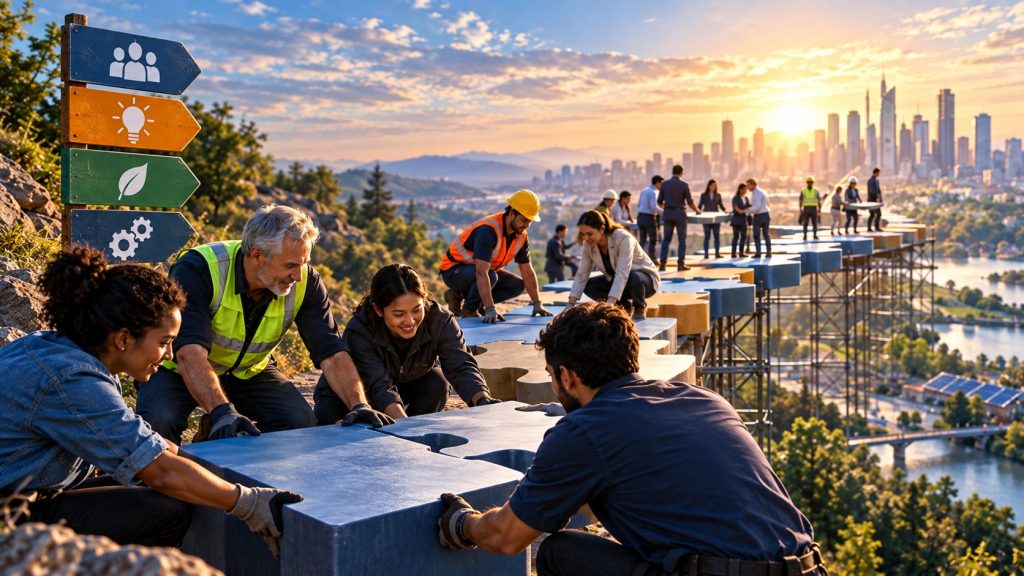
We all carry beliefs about how people should be treated, what a fair society looks like, and what kind of future we want.
Then we look at the world around us.
What we see can leave us confused, angry or discouraged. We may feel pulled between what we believe and what seems to be happening. We may wonder whether our views are naïve, whether change is possible, or whether the only answer is to choose a side and defend it.
Politics matters. Decisions made by governments and institutions can shape people’s lives profoundly. But political labels and arguments do not tell the whole story. They cannot capture every person’s experience, every idea for change or every way people might contribute.
Behind the headlines are people experiencing real conditions: insecurity, unfairness, isolation, lack of opportunity, uncertainty about the future. There are also people with ideas, experience, time, skills and determination who want to help make things better.
Perhaps we begin by questioning our own assumptions. Are we seeing the whole picture? What are we taking for granted? Could things change? What could we do? Where else might we look?
Even when we know the outcome we want, we can ask whether we are on the right path to reach it. We may be right about the change we hope to see and still need to explore whether the way we are pursuing it can get us there.
This begins with each of us, but it cannot end with one or two people. Every person should have the right and opportunity to examine assumptions in detail, decide what matters to them and define the ambitions they want to pursue. When we make those ambitions visible, others can respond, contribute their own perspectives and help shape what happens next.
A performative merry-go-round keeps us reacting to statements, defending positions and repeating familiar arguments while the conditions affecting people remain. We can move beyond that cycle when everyone has a genuine opportunity to take part: to Challenge Assumptions, Make Others Aware, Stop What Needs Stopping, and Co-Create New Realities.
We will only overcome polarisation when all of us can question assumptions—including our own—in detail, bring our experiences into the conversation and help shape the ambitions and actions that follow. People will still see things differently. Each person can choose what matters to them, explain what they see, and take part in finding a way forward.
Ideas-Shared is designed for that kind of participation. It gives people a place to share their ambitions, find others who may want to help and work together towards personal, professional and societal outcomes.
What assumptions might we all need to challenge? What matters to you—and what could we make possible together?